Past Project
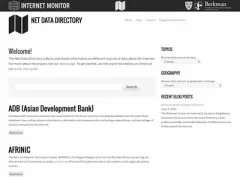
Internet Monitor
Internet Monitor's aim was to evaluate, describe, and summarize the means, mechanisms, and extent of Internet content controls and Internet activity around the world. The project helped researchers, advocates, policymakers, and user communities understand trends in Internet health and activity through research, analysis, and data visualization.
Internet Monitor has several components:
- Internet Monitor’s AccessCheck allowed users to test websites in over 50 countries to see whether they were available in real time. Test results included a thumbs up/down notification indicating whether the site was available, as well as a screenshot and more detailed data on status codes, timings, and any errors encountered. AccessCheck combined data from virtual private network endpoints, virtual private servers, and from measurements collected by the Information Controls Lab (ICLab) and by the Open Observatory of Network Interference’s (OONI) OONI Probe.
- The Internet Monitor website was home to our research bulletin series and blog, which provided expert analysis on the state of the global Internet, focusing on notable events and trends in the digital space.
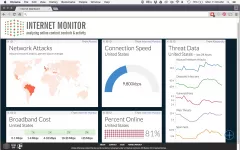
- The Internet Monitor Dashboard offered users the opportunity to customize a collection of data visualization “widgets” according to their interests. The dashboard compiled and curated data from multiple sources, including primary data collected by the Berkman Klein Center and our partners, as well as relevant secondary data. Users could create individual boards that provided a real-time view of the state of the Internet across a variety of dimensions, enabled easy comparisons across countries and data sources, and were easy to configure, edit, and share.